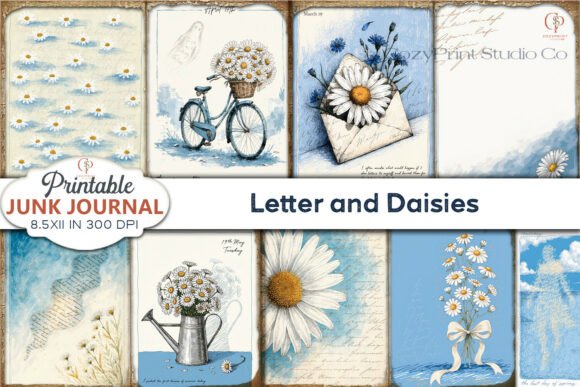
Letter and Daisies Junk Journal Pages: A Digital Resource for Analog Creativity
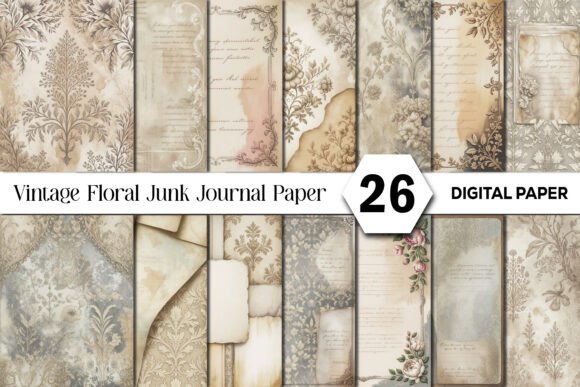
There is a distinct tactile satisfaction in flipping through a junk journal filled with layered textures, vintage ephemera, and botanical illustrations. The Letter and Daisies Junk Journal Pages collection bridges the gap between digital convenience and analog charm, offering a curated set of backgrounds designed specifically for mixed media artists. Rather than spending hours hunting through antique shops or risking damage to original vintage documents, this digital asset provides immediate access to high-fidelity aesthetics. The collection focuses on the timeless combination of handwritten correspondence and delicate floral motifs, creating a versatile foundation for memory keeping and artistic expression.
At its core, this resource solves the scarcity problem that many paper crafters face. Authentic vintage letters are becoming increasingly expensive and fragile, while daisy illustrations from old botanical plates are often copyrighted or difficult to source in high resolution. By utilizing these ready-to-print digital files, creators gain the visual weight of history without the preservation anxiety. The pages serve as more than just background paper; they act as narrative anchors that suggest stories of past correspondence, springtime renewal, and domestic tranquility, setting an immediate emotional tone for any project.
Practical Applications in Memory Keeping and Art
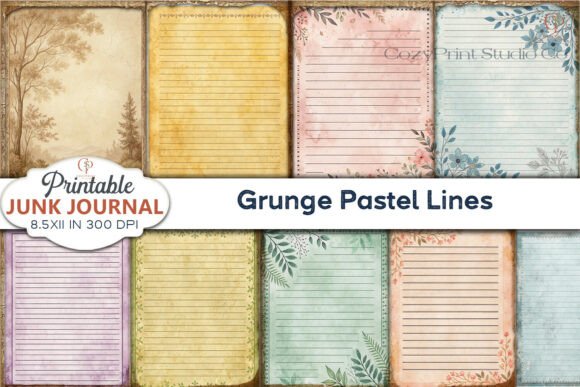
The most immediate application for these pages is within traditional junk journaling, where the goal is often to create a cohesive spread that feels collected over time rather than manufactured in a single sitting. When working with the Letter and Daisies Junk Journal Pages, the 8.5 x 11 inch format allows for full-page spreads in standard letter-sized journals or can be trimmed down for smaller A5 or traveler’s notebook inserts. The handwritten script elements provide built-in texture that mimics the look of aged parchment, eliminating the need to physically distress new paper to achieve an authentic patina. This is particularly valuable for journalers who want the vintage aesthetic but prefer working with fresh, clean paper that feeds smoothly through home printers.
Beyond journaling, these digital assets excel in scrapbooking layouts where balancing text-heavy areas with visual interest is a constant challenge. A page featuring dense cursive writing creates a natural negative space when overlaid with modern photographs, preventing the layout from feeling sterile. Conversely, the daisy illustrations offer focal points that can frame candid shots or serve as transition elements between different sections of a memory book. For heritage scrapbookers documenting family history, the letter-style backgrounds provide a thematic link to ancestors without requiring the use of irreplaceable original documents. You can print multiple copies to test different layout configurations, a freedom that physical antiques simply cannot offer.
Elevating Paper Crafts and Stationery Design
Card makers and stationery designers frequently encounter the dilemma of needing unique, textured backgrounds that do not overwhelm the sentiment. These junk journal pages function exceptionally well as card bases or interior liners. Because the files are delivered at 300 DPI, the fine details of the pen strokes and petal veins remain crisp even when scaled down for standard greeting card sizes. The neutral color palette typical of letter and daisy themes ensures compatibility with a wide range of ink colors, stamps, and embellishments. Instead of purchasing pre-made cards, artisans can print these designs on heavyweight cardstock to create bespoke stationery suites for weddings, baby showers, or personal correspondence.
For collage artists, the utility lies in the ability to deconstruct and reassemble. While the files arrive as complete pages, they are designed to be cut apart. Fussy-cutting individual daisies or isolating specific paragraphs of handwriting allows for modular design work. This transforms a static background into a dynamic kit of parts. Artists working in art planners or bullet journals benefit significantly from this modularity, using smaller elements as washi tape alternatives, header decorations, or margin notes. The digital nature of the source material means you never run out of a favorite element; if a particular daisy cluster perfectly complements your current mood board, you can print it as many times as necessary.
Navigating Technical Specifications and Print Quality
Understanding the technical parameters of the Letter and Daisies Junk Journal Pages is essential for achieving professional results. The inclusion of 10 high-quality JPEG files offers variety without overwhelming the user with excessive choice paralysis. Each file is optimized for 8.5 x 11 inch printing, which aligns with standard US paper sizes. However, users outside North America should note that scaling may be required for A4 paper. Most printer settings allow for "fit to page" adjustments that maintain aspect ratio without significant distortion, though some cropping of margins may occur. Testing a single page on plain paper before committing to premium stock is always a recommended practice to verify alignment and color accuracy.
Resolution plays a critical role in the perceived quality of vintage-style prints. At 300 DPI, these files meet the industry standard for high-quality art reproduction. Lower resolution files often result in pixelated text or muddy floral details when printed, breaking the illusion of age and authenticity. When selecting paper, consider how the substrate interacts with the digital image. Matte photo paper or lightweight cardstock tends to replicate the non-reflective surface of aged paper better than glossy options. For those seeking deeper antiquity, printing on tea-stained or coffee-dyed paper can enhance the digital design, adding physical warmth to the digital precision. The instant download format facilitates this experimentation, allowing for immediate iteration and adjustment.
Creative Considerations and Limitations
While digital downloads offer immense flexibility, they differ fundamentally from physical ephemera. It is important to recognize that the Letter and Daisies Junk Journal Pages are flat representations of texture. They lack the raised grain of true linen paper, the indentations of actual fountain pen nibs, or the subtle foxing that occurs naturally over decades. For mixed media artists who rely heavily on tactile feedback, these pages serve best as a base layer to be enhanced with physical mediums. Adding real wax seals, stitching, torn edges, or translucent vellum overlays can reintroduce the dimensional qualities that digital files inherently lack. Viewing these pages as a starting point rather than a finished product leads to more satisfying creative outcomes.
Licensing and usage rights also warrant attention. As a digital download intended for personal creative projects, these files are typically licensed for individual use in handmade items. Those considering selling products created with these assets—such as bound journals or greeting cards—should verify the specific commercial terms associated with their purchase. Additionally, because this is a digital-only product, there is no physical shipping involved. This eliminates wait times and shipping costs but places the responsibility of color management and print quality squarely on the user. Calibrating your monitor and understanding your printer’s color profile can make the difference between a vibrant, usable page and a dull, disappointing print.
Ultimately, the value of this collection extends beyond the ten individual files. It represents a workflow solution for modern creatives who honor traditional aesthetics. Whether you are documenting daily gratitude, preserving family memories, designing custom stationery, or exploring abstract collage, these pages provide a reliable, high-quality foundation. They democratize access to vintage style, making the beauty of letters and daisies available to anyone with a printer and a desire to create. By integrating these digital resources thoughtfully into analog practices, artists can enjoy the best of both worlds: the efficiency of digital design and the soulful imperfection of handcrafted art.