Vintage Pink Toile Digital Paper for Creative Projects
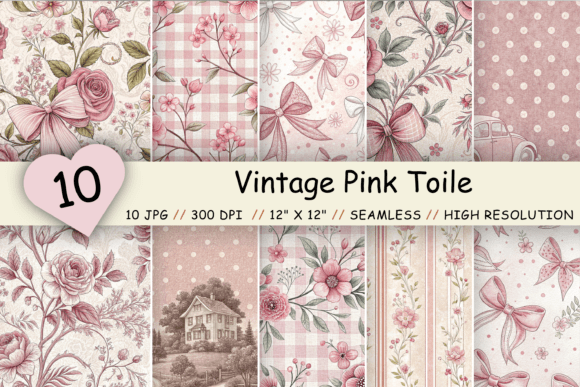
The resurgence of romantic aesthetics in digital design has brought classic patterns back into the spotlight, and few styles capture this sentiment quite like Vintage Pink Toile Digital Paper. For creators, small business owners, and hobbyists, finding high-quality background assets that balance nostalgia with modern usability is often a challenge. This specific collection bridges that gap by combining traditional French toile motifs with contemporary coquette bow patterns and preppy gingham accents. Whether you are designing physical invitations or curating a digital brand identity, understanding the utility and application of these premium digital papers can significantly elevate your creative output.
Defining the Aesthetic and Technical Quality
Vintage pink toile is characterized by its intricate, pastoral scenes and delicate line work, traditionally rendered in a single color on a light background. When adapted for digital use, this pattern offers a sophisticated texture that feels both timeless and fresh. The inclusion of coquette bows adds a playful, feminine touch that aligns perfectly with current design trends, while preppy gingham provides a structured geometric contrast to the organic flow of the floral illustrations.
Beyond the visual appeal, the technical specifications of these files determine their real-world value. This collection includes 10 JPG files formatted at 3600 x 3600 pixels. This dimension is critical because it equates to a standard 12 x 12 inch scrapbook page size at 300 DPI (dots per inch). In professional printing and high-resolution digital display, 300 DPI is the industry benchmark for crisp, non-pixelated results. Using lower resolution assets often leads to blurry prints or unprofessional digital presentations, making this high-resolution specification a non-negotiable feature for serious creators.
The Importance of Seamless Patterns
A defining feature of this digital paper set is its seamless nature. A seamless pattern, also known as a repeating pattern, is engineered so that the design replicates infinitely without visible breaks or interruptions. For designers using software like Photoshop, Canva, or Illustrator, this functionality is essential. It allows you to fill backgrounds of any dimension—from a small business card to a large website hero banner—without having to manually clone or patch areas where the image ends.
This seamless quality directly impacts workflow efficiency. Instead of spending hours adjusting layout elements to hide seams or stretching images until they distort, you can apply the pattern as a fill layer. This ensures consistent branding across different collateral sizes and maintains the integrity of the vintage pink toile artwork regardless of the canvas dimensions.
Practical Applications Across Industries
The versatility of Vintage Pink Toile Digital Paper extends far beyond simple scrapbooking. Its unique blend of vintage charm and modern structure makes it suitable for a wide array of personal and commercial projects.
- Event Stationery and Invitations: Baby showers, bridal showers, and first birthday parties frequently utilize soft pinks and classic motifs. These papers serve as ideal backgrounds for printed invitation suites, place cards, and welcome signs. The high resolution ensures that fine details in the toile and gingham remain sharp when printed on cardstock.
- Junk Journaling and Paper Crafts: For the growing community of junk journal enthusiasts, printable ephemera is a staple. These digital papers can be printed at home and cut into tags, pockets, or decorative layers. The mix of floral toile and coquette bows provides variety within a single cohesive theme, reducing the need to purchase multiple disparate packs.
- Digital Branding and Social Media: Content creators and influencers focusing on lifestyle, beauty, or cottagecore aesthetics can use these seamless patterns as Instagram story backgrounds, Pinterest pin templates, or blog headers. The soft pink palette is visually engaging without being distracting, allowing text and product photography to stand out clearly.
- Product Packaging and Merchandise: Small business owners selling handmade goods, jewelry, or stationery can use these digital files to design custom tissue paper, sticker sheets, or thank-you cards. Creating branded packaging in-house with premium digital paper helps maintain a professional appearance while keeping overhead costs low compared to custom manufacturing minimums.
Evaluating Usability and File Management
When integrating Vintage Pink Toile Digital Paper into your workflow, proper file management ensures long-term usability. Since the product is delivered as a zipped file containing JPGs, organization is key. Upon extraction, consider renaming files descriptively (e.g., "Pink-Toile-Bow-Seamless-01.jpg") rather than relying on generic numbering. This saves time when searching through asset libraries months later.
For digital projects, always work with the original high-resolution master file. Even if your final export for web use will be smaller, starting with the 3600 x 3600 pixel source prevents quality degradation during editing. If you are printing, verify your printer settings are configured for "High Quality" or "Photo" mode to accurately reproduce the subtle gradients and fine lines inherent in toile designs. Standard document printing modes may oversimplify these details, resulting in a flat appearance.
Design Considerations for Readability and Balance
While vintage toile is beautiful, it is also visually complex. When using these patterns for projects involving text, such as invitations or social media graphics, contrast is paramount. The intricate nature of the flowers and bows can sometimes compete with typography. To maintain readability, consider placing text within solid-colored shapes or using semi-transparent overlays atop the digital paper. Alternatively, utilize the negative space within the pattern itself; many toile designs have open areas specifically suited for monograms or messaging.
Color coordination is another practical consideration. Although labeled "vintage pink," monitor calibration varies significantly. Before committing to a large print run for an event or product line, always print a test swatch. This ensures the pink tone matches other physical elements like ribbons, tablecloths, or existing branding materials. Digital screens often display colors more vibrantly than ink on paper, so physical verification is a necessary step in professional production.
Maximizing Value in Creative Workflows
Investing in premium digital papers like this collection is about more than just acquiring pretty backgrounds; it is about securing reliable, high-quality assets that streamline production. The combination of historical elegance with trending coquette and gingham elements future-proofs the purchase, ensuring relevance across multiple seasons and project types. By leveraging the seamless, high-resolution nature of these files, creators can produce professional-grade work efficiently, whether for a client deliverable, a personal passion project, or a commercial product line.
Ultimately, the success of using Vintage Pink Toile Digital Paper lies in understanding its strengths. It excels as a foundational layer that adds depth and context to a design without requiring extensive illustration skills from the user. By treating these files as versatile building blocks rather than static images, you unlock their full potential across print, digital, and mixed-media applications. Stay updated with new releases and follow for more resources to keep your asset library fresh and aligned with evolving design standards.