Grunge American Flag Vector Art: Selecting Authentic Distressed Designs for Professional Results
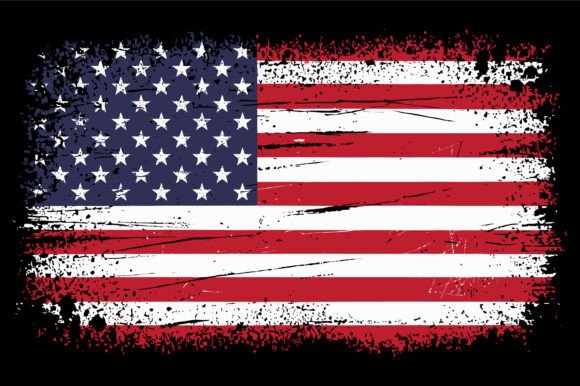
The appeal of Grunge American Flag Vector Art lies in its ability to convey history, resilience, and rugged patriotism without appearing sterile or overly polished. This bold USA flag design features a distressed, grunge-style aesthetic with ink splatters and scratch effects that evoke a sense of lived experience rather than digital perfection. The stars and stripes are rendered in a rugged, edgy brushstroke pattern with vintage wear and patriotic intensity, making it an ideal choice for creators seeking authenticity. However, the difference between a powerful visual statement and a cluttered, amateurish mess often comes down to technical selection and application. Many designers and business owners overlook critical details when sourcing these assets, leading to poor print quality or legal complications. Understanding the nuances of vector distressing is essential for producing high-quality t-shirts, July 4th crafts, military tributes, or Americana-themed projects.
Distinguishing True Vectors from Raster Imitations
One of the most frequent and costly mistakes in this niche is assuming that any downloadable file labeled "vector" is truly scalable. In the world of grunge aesthetics, this distinction is vital. Genuine Grunge American Flag Vector Art uses mathematical paths to define the edges of ink splatters, scratches, and worn textures. This allows you to resize the design from a lapel pin to a barn banner without losing edge definition.
Conversely, many marketplaces sell raster images (JPEGs or PNGs) saved inside an EPS container. These are essentially photographs of texture trapped in a vector wrapper. When you attempt to scale these up for large-format printing or apparel, the edges become pixelated or blurry, destroying the intended rugged aesthetic. Before purchasing or downloading, always open the file in professional software like Adobe Illustrator, Affinity Designer, or CorelDRAW. Zoom in to 400% or higher on the distressed edges. If you see smooth curves and anchor points, it is a true vector. If you see jagged pixels or a bounding box around a flat image, it is a raster impostor. Choosing true vectors ensures your production costs remain predictable and your final product maintains professional integrity.
Evaluating Texture Density for Different Substrates
A common oversight is selecting grunge art based solely on screen appearance without considering the physical medium. A design that looks beautifully weathered on a high-resolution monitor may fail catastrophically on fabric or textured paper. The issue is usually texture density. Some distressed flags feature micro-details—tiny specks of dust or hairline scratches—that are visually appealing digitally but physically impossible to reproduce in certain formats.
For screen printing, excessive detail increases setup costs and risk. Tiny isolated dots of ink can wash out during exposure or clog mesh screens, resulting in a patchy, unintended look. For direct-to-garment (DTG) or sublimation, overly dense grunge can create a heavy, plastic-like feel on the shirt if the white underbase is not managed correctly. For vinyl cutting, complex grunge is often uncuttable; the machine cannot navigate thousands of tiny nodes, leading to torn material and wasted time.
To avoid this, match the complexity of the Grunge American Flag Vector Art to your output method. For screen printing and vinyl, seek designs with "bold distress" or "stamp style" textures where the wear patterns are consolidated into larger, manageable shapes. Reserve intricate, high-frequency noise textures for DTG, paper prints, or digital-only media. Always request or create a test swatch at actual size before committing to a full production run. This practical step prevents expensive reprints and ensures the vintage wear translates effectively to the physical world.
Navigating Licensing and Commercial Usage Rights
Patriotic designs occupy a unique space in intellectual property. While the U.S. flag itself is public domain, specific artistic interpretations—including grunge treatments, brushstroke arrangements, and composite textures—are protected by copyright. A significant error occurs when creators assume that because the subject matter is national symbolism, the specific vector file is free for unrestricted commercial use. This misunderstanding can lead to cease-and-desist notices, marketplace takedowns, or financial penalties.
When evaluating Grunge American Flag Vector Art, read the license agreement with the same scrutiny you would apply to a contract. Check specifically for:
- Print-on-Demand (POD) Restrictions: Many licenses prohibit using the vector as the primary element on POD products without significant modification.
- End Product Limits: Some licenses cap the number of units you can sell (e.g., 500 vs. unlimited).
- Attribution Requirements: Free resources often require credit, which may be impractical on merchandise.
- Trademark Prohibitions: You generally cannot trademark a logo incorporating stock grunge elements, which limits brand protection.
If your project involves building a long-term brand or selling merchandise at scale, investing in an extended commercial license or commissioning custom artwork is often safer and more sustainable than relying on standard royalty-free assets. Document your licensing proof immediately upon purchase to streamline future audits or dispute resolutions.
Optimizing Color Separation and Printability
Grunge aesthetics often rely on blending modes, transparency, and gradients to achieve depth on screen. Unfortunately, these effects do not translate directly to most analog printing processes. A frequent frustration arises when a designer sends a visually stunning, semi-transparent grunge flag to a printer, only to receive back a flattened, muddy result. This happens because the vector file contains appearance attributes rather than solid color separation.
Before sending Grunge American Flag Vector Art to production, verify how the distress effects are constructed. Are they achieved through opacity masks, blend modes, or actual compound paths? For professional results, especially in apparel, the grunge should be built with solid shapes or halftone patterns, not transparency. If you are working with a file that relies heavily on effects, take the time to expand appearances and flatten transparency within your vector software. Create a dedicated color separation proof to visualize exactly how each ink layer will interact. This corrective workflow adds upfront time but eliminates the guesswork and disappointment of failed print runs.
Balancing Aesthetic Intensity with Legibility
Finally, there is the design balance trap. The "patriotic intensity" mentioned in grunge descriptions can sometimes overwhelm functional communication. When incorporating text, logos, or calls to action alongside a heavily distressed flag, the competing visual noise can render the message unreadable. Beginners often layer text directly over the busiest parts of the grunge texture, assuming the contrast will hold. It rarely does in production.
Treat the grunge flag as a background element that requires breathing room. Use negative space strategically; if the flag has heavy ink splatters on the left, place your typography on the cleaner right side. Consider reducing the opacity of the vector layer or using a knockout mask to create clear zones for text. Remember that the goal of using Grunge American Flag Vector Art is to enhance the message, not obscure it. Test legibility by viewing the design at thumbnail size and in grayscale. If the core message disappears against the textured background, simplify the composition. Effective Americana design honors both the aesthetic grit and the clarity of communication.