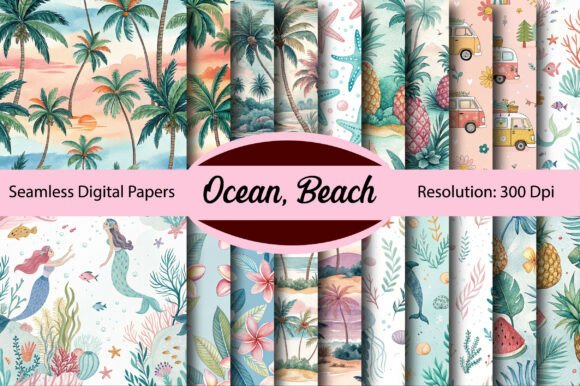
Evaluating Ocean and Beach Seamless Digital Paper for Creative Projects
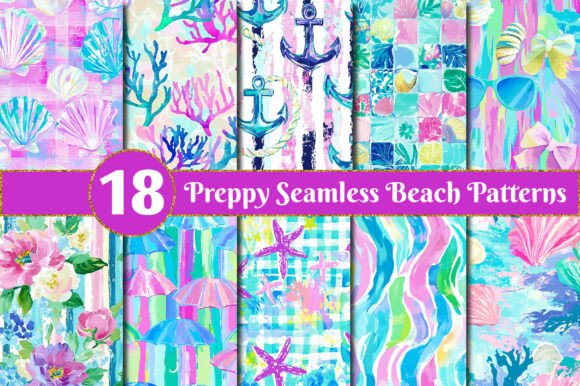
Selecting the right background asset requires balancing aesthetic appeal with technical functionality. When designers, crafters, and content creators search for Ocean, Beach Seamless Digital Paper, they are typically looking for more than just a coastal image; they require a functional design element that maintains visual integrity across various mediums. These digital assets serve as foundational layers for print products, web interfaces, and physical crafts. Understanding the specific characteristics of high-quality seamless patterns helps distinguish professional-grade resources from generic stock imagery, ensuring the final output meets both creative and production standards.
Defining Technical Quality in Coastal Patterns
The primary distinction between standard beach photography and true Ocean, Beach Seamless Digital Paper lies in the tiling capability. A genuine seamless pattern is engineered so that the edges match perfectly when repeated horizontally and vertically. This technical precision eliminates visible grid lines or abrupt transitions, which is critical for large-format printing and responsive web backgrounds. When evaluating these assets, resolution is the first metric to verify. Professional digital papers should be provided at 300 DPI (dots per inch). While screen-only projects may tolerate lower resolutions, any intention to use the file for packaging, fashion projects, or physical scrapbooking demands this density to prevent pixelation or blurring upon close inspection.
File format also plays a significant role in utility. Although vector formats offer infinite scalability, JPEG remains the industry standard for complex, painterly, or textured ocean themes due to its ability to handle rich color gradients and organic details efficiently. High-quality JPEG seamless papers strike a balance between manageable file size and visual fidelity. Users should also pay attention to transparency options. While JPEGs do not support alpha channels natively, many premium packs include variations with transparent overlays or isolated elements. This flexibility allows designers to layer the ocean texture over solid colors or other patterns without destructive editing, expanding the versatility of a single purchase.
Comparing Seamless Papers Against Alternative Background Solutions
When planning a project, it is necessary to weigh Ocean, Beach Seamless Digital Paper against other available background solutions. The choice often depends on the scale of application and the desired level of customization. Raster-based seamless papers differ significantly from vector patterns, generative AI backgrounds, and standalone stock photography.
Seamless Raster Papers vs. Vector Patterns
Vector patterns are mathematically defined, making them ideal for geometric designs and logos that require infinite resizing. However, ocean and beach themes often rely on organic textures—water ripples, sand grain, foam, and light refraction—that vectors struggle to replicate authentically. Ocean, Beach Seamless Digital Paper in JPEG format captures these natural imperfections better than vector equivalents. The tradeoff is scalability; while a 300 DPI raster file is excellent for standard print sizes like cards, party packs, and apparel, it cannot be scaled indefinitely like a vector. For projects requiring billboard-sized ocean backdrops, vectors or ultra-high-resolution composites may be superior. For most consumer and boutique applications, however, the textural richness of raster paper outweighs the scalability benefits of vectors.
Digital Papers vs. Generative AI and Stock Photography
The rise of AI-generated imagery has introduced an alternative to traditional digital papers. While AI can create unique coastal scenes instantly, it often lacks the precise edge-matching required for true seamlessness. Post-processing AI outputs to make them tileable can introduce artifacts or distortions. Curated Ocean, Beach Seamless Digital Paper collections are specifically designed for repetition, saving hours of manual editing. Furthermore, stock photography provides beautiful singular images but fails when used as a repeating background for websites or wrapping paper. Photographs have distinct focal points and lighting gradients that create jarring visual rhythms when tiled. Seamless digital papers distribute visual weight evenly, ensuring that text placed over them remains legible and that the pattern does not distract from the central content.
Assessing Suitability Across Different Applications
The versatility of ocean-themed seamless patterns makes them applicable to a wide range of disciplines, but suitability varies by context. Evaluating the specific demands of your project will determine if this asset type is the correct investment.
- Print and Packaging: For product labels, gift wrap, and party supplies, 300 DPI seamless papers are the optimal choice. The consistent pattern ensures that no matter how the paper is cut or folded, the design remains coherent. Textured ocean papers add a tactile visual quality that elevates perceived value in retail environments.
- Fashion and Textile Design: Surface pattern design for apparel requires flawless tiling. Ocean, Beach Seamless Digital Paper allows designers to visualize fabric repeats accurately before manufacturing. Unlike photographic prints, these patterns avoid awkward cropping of horizon lines or focal objects across garment seams.
- Web and Blog Backgrounds: Digital interfaces benefit from lightweight, non-distracting textures. Seamless ocean papers provide thematic consistency without the heavy load times associated with full-screen video or massive hero images. They serve as excellent CSS background-repeat elements, creating immersive atmospheres for travel blogs, marine conservation sites, or summer event pages.
- Scrapbooking and Papercraft: Physical crafting relies heavily on coordination. Digital scrapbooking enthusiasts value seamless papers because they can be resized and cropped without losing edge integrity. For traditional scrapbooking, printing these patterns at home or through professional services yields consistent results that match coordinating cardstock and embellishments.
Tradeoffs and Limitations to Consider
Despite their advantages, Ocean, Beach Seamless Digital Paper is not a universal solution. Recognizing limitations prevents frustration during the production phase. One common challenge is color management. Screens display colors in RGB, while printers use CMYK. Vibrant turquoise and aqua tones common in ocean themes are notorious for shifting during conversion. Users must verify whether the digital paper provider includes CMYK versions or ICC profiles to ensure printed results match screen previews. Relying solely on an RGB JPEG for professional offset printing can result in dull or muddy blues.
Another consideration is stylistic specificity. Ocean themes range from photorealistic to watercolor, minimalist, and cartoon. A realistic wave pattern may clash with playful typography in a children’s party pack, just as a flat vector-style ocean might feel out of place on luxury spa packaging. Unlike solid colors, patterns carry inherent mood and style baggage. If a project requires absolute neutrality or brand-exact color matching, a subtle texture or solid background may be safer than a thematic ocean pattern. Additionally, while JPEGs are widely compatible, they are lossy formats. Repeatedly editing and saving a JPEG degrades quality. Professionals should treat the downloaded file as a master copy, working from duplicates to preserve the original 300 DPI integrity.
Making an Informed Selection Decision
Choosing the right Ocean, Beach Seamless Digital Paper involves aligning technical specifications with creative intent. Start by defining the end medium. If the project is exclusively digital, prioritize file size and color vibrancy over print-ready resolution. If the output is physical, 300 DPI and color accuracy become non-negotiable. Review sample tiles rather than single preview images; zoom in to check for repetitive artifacts or obvious cloning marks that indicate poor seamlessness. Evaluate the licensing terms carefully, especially for commercial applications like packaging or fashion. Some licenses restrict mass production or require attribution, which may influence the cost-benefit analysis compared to hiring a custom illustrator.
Ultimately, the decision rests on the balance between convenience and customization. Pre-made seamless papers offer immediate access to professional textures at a fraction of the cost of bespoke design. They excel in projects where time efficiency and proven aesthetics are paramount. However, for brands requiring exclusive visual identity or highly specific regulatory compliance in packaging, custom creation may still be necessary. By understanding the technical foundations, comparative advantages, and practical applications of these digital assets, creators can confidently integrate ocean and beach themes into their work, ensuring results that are both visually captivating and professionally executed.